Concepts, symbols and recurring visions.
This page collects the philosophical and narrative background of the band’s main concepts, videos and albums.
Touching Waves - videoclip
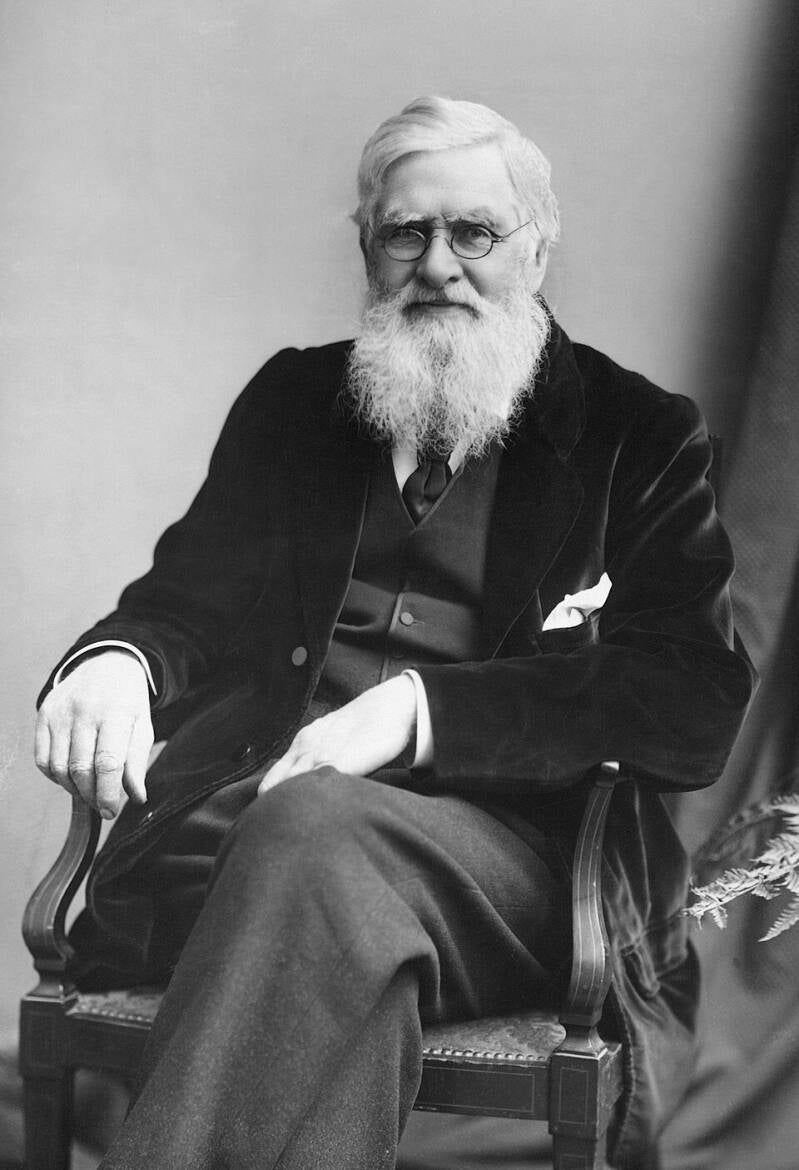
Alfred Russel Wallace (1823-1913), co-discoverer of the theory of natural selection alongside Charles Darwin, gradually developed a philosophical position that differed from strictly materialistic Darwinism. While he accepted natural selection as the main driver of biological evolution, Wallace came to argue that certain human capacities, especially consciousness, abstract reasoning, moral sense, and artistic creativity, could not be fully explained by purely natural and random processes.
Influenced by spiritualism and a teleological view of nature, Wallace proposed that evolution might be guided or shaped by an intelligent principle or a higher mind. In his view, the universe was not a purely mechanical system but possessed a spiritual dimension capable of intervening at key stages of human development. This led him to advocate a form of directed or “intelligent” evolution, although it differed from modern Intelligent Design movements because Wallace remained strongly committed to scientific inquiry and empirical observation.
His stance was controversial among many scientists of his time, as it introduced metaphysical elements into evolutionary theory. Nevertheless, Wallace consistently sought to reconcile science and spirituality, arguing that natural laws and a higher guiding principle could coexist without contradiction. Today, his thought is often regarded as a historical example of the tension between scientific explanations and philosophical or spiritual interpretations of evolution.
Janny takes center stage once again in the new music video “Touching Waves.” The opening track of the concept “Lapse of Time” invited listeners to immerse themselves and allow the “frequencies” of the Universe to flow through them, to listen closely to everything that today is often dismissed as negligible or superstitious. While humanity is absorbed in mass culture, she discovers that a celestial event will trigger an aurora borealis not far from her city. What matters is not what visibly happens, but the meaning that can be given to every event by someone who possesses and safeguards an ancient gift!

Planting Trees on the Moon
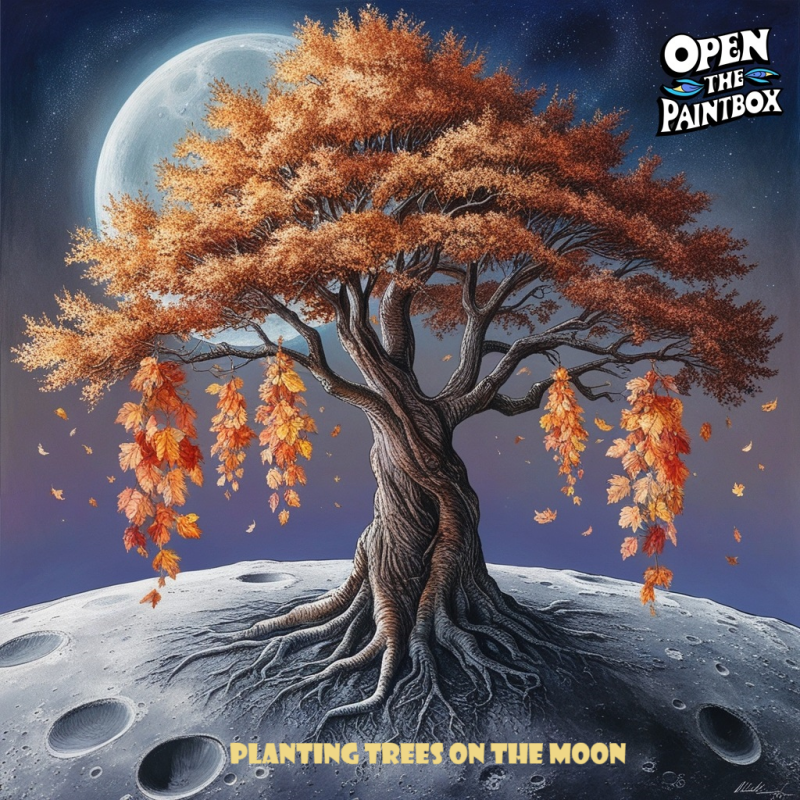
"Planting Trees on the Moon" is the second album (currently in progress), inspired by the classics of historical Prog Rock. Its central theme revolves around the cycle of illusion and disillusionment, empirically comparing every human effort or attempt at improvement and change to planting seeds in unreachable and uncultivable soil.
The suite The Castle addresses, in its first part, the theme of social ascent and the dismay of facing harsh and problematic responsibilities (The Lady of the Castle), while the second part entrusts the character of Prince Harold with the anticipation of a new day and the awareness of perishing in battle.
The suite’s initially more classical and at times medieval tone is interrupted by a more intense Rock track (Solar Storm), which calls for a return to the past and a Social Reset triggered this time by our own Sun.
The epilogue of life as a frantic search, running into illusions that wither and fall like autumn leaves, is captured in the ballad Leaves in the Wind.
The second part of the concept explores the more social root of this cycle, from the pollution of Truth in journalistic news (Artificial Pollution) to the awareness, after 10 years of growth and individual maturation, of living in a world now transformed and distant from the more naive yet wholesome dreams of adolescence (Ten Years After).
The conclusion is instead an invitation to awaken our consciousness, at times comfortably entangled in vague, even political interests, to stop "sleeping" and instead rise and fight (Kingdom of the Sleepers).
The Identity videoclip
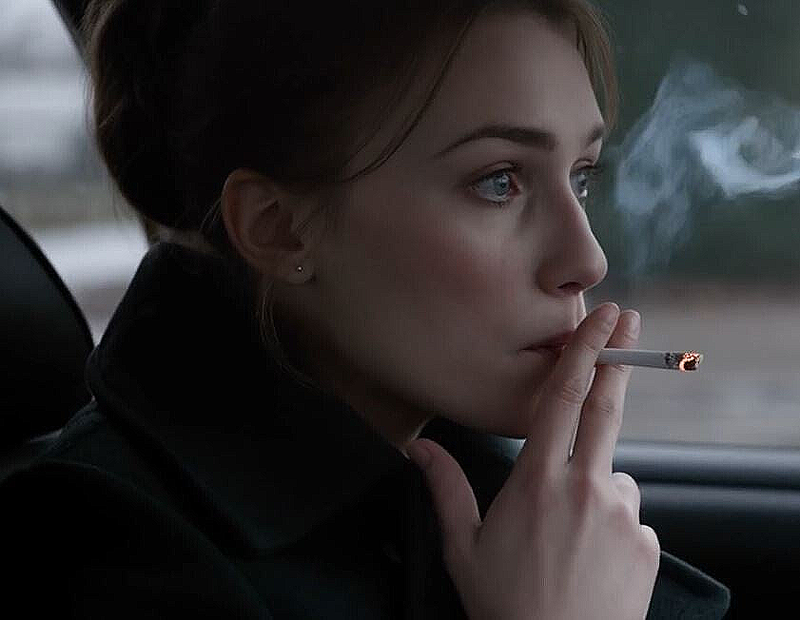
Janny is a city girl, sweet and complex, apparently sociable but profoundly solitary. She spends most of the time studying, hoping to find answers to the many questions that torment her, forcing her to adopt unusual, controversial behaviors, sometimes bordering on ambiguity.
The mirror, a frequent image in her nightmares, reflects an inner duality: her reflection does not entirely resemble her. Who, then, is Janny, and what do others see in her? Does her duality imply a disjunction of being or a complementarity of parts, a masculine and feminine essence she cannot manage and struggles to control?
If one ascends to a higher state of consciousness, one may grasp why Nature chose to separate these two components, placing them in different physical entities. The key to understanding the dualism in all aspects of existence lies in the constant search for balance and union, a pursuit that gives meaning or direction to every desire and every pain.
The darkness of the soul will always seek a ray of sunlight, just as the night will reveal hidden wonders to those willing to stop and embrace them. If the answer lay in the need to recognize oneself as an integral part of a system, to find within it the cog that perfectly fits us in this infinite wheel, then Janny might find it in the roots of a past now buried, crushed by the relentless motion of life’s wheel, which leaves many people behind, demanding that we surpass ourselves and even our own true identity.
Janny is not a girl who exists in reality,
but only in a virtual space,
where everyone of us tends to lose
our Identity.
The meaning of "Lapse of Time"
Behind the mechanics of the universe and its slow rotation around a spot, lies the ability of being amazed by nature, no longer seen as a simple case, but as a deep imminence of an even greater meaning. Only the ones listening can understand this profound meaning, inspired by a rebirth of the awareness of living in a world that has become secularized and material. We would like to stop time to grasp in a lapse of time the greatness of creation. What are we then, if not a lapse of time in an infinite universe?
It represents a reference to this revelation, hidden between the frequencies of the universe. Listening and understanding our origins from nature, not being afraid to surrender to these new and yet old sensations.
It talks about how our life is immersed in an infinite cycle, repeating itself every day. What remains of the light that illuminates us and that at night disappears? Surely its meaning is the search for this light, to which to attribute the deepest and most metaphysical meanings, in this life that appears mechanical, predictable and material.
It also expresses the nature of circularity of life. Our memories will be added to the future ones, that seen today are the image of a future time that sooner or later will be past for us, but which still seems to fall on our present. We remember the choices made that have somehow influenced our future. So, we often ask ourselves if that choice was only the future that in order to be fulfilled needed to force us in some way. How free are we to choose? How much some memories will continue to condition our life in this lapse of time we are given? Everyone is looking for revenge and hopes to find its own promised land in this small-time frame, that we try to cross without giving up, and if we turn towards what’s around us we can often find comfort in this path, like the moon that follows us while we cross a night, lightless landscape. The moon is in fact a guide in this path.
We live in a world so frenetic and fast that we feel comforted by living in our modernity, in this technology that seems to give us everything, and soon she will definitely be able to artificially fulfil our dreams. What could happen if we could stop in a simple lapse of time the magnificence of the Universe, of the entire creation? Would we discover that our lives have a profound meaning, linked by a profound desire for brotherhood, for unity? Then we ask ourselves if the man who lives immersed in today’s reality can grasp all of this, can therefore be interested in looking at himself as an intelligence that the spinning Universe wanted to create.
Part 1 - Will Be Rain
This first part is the image of a man who transfigures, that is, understands this sense of nature immersed in small things. The rain wets him and this rain falls onto the nearby forest. He realizes of being the same as nature, that is, a creation that awakens and now can grasp its deepest meanings.
Part 2 - The Veil
In the second part, the man is aware of this transformation, and feels the absence of the dimension around him. Reality is disappearing, leaving space to the light. The veil of reality is ripping, and this immense space of awareness appears. The awareness that wants to sow, produce and bring others closer. The man asks to his partner if she still wants him, because he understands that during this transformation he could lose his materiality. This is also food for thought on the possible transcendence of feelings. Maybe the drama of the man who is listening is precisely that of not being recognized as such?
Part 3 - Like A Father
The third part identifies the drama of this transfiguration. The man reaches, getting closer to culture, religion, philosophy, a state of grace but also of deep restlessness. Space seems not to exist, and it seems to be no place for those who manage to rise above the materiality. We rise towards eternity, but our life is still linked to a lapse of time that makes us fall back into the night, into the awareness of still being. This man will try all his life to seek the more authentic meaning of things, and in his loneliness, he will ask for his father’s help, of this figure we would like to be a guide. We would like him to be our own father, or God himself. We’re men and we fall in this cycle of lives. Many times, we’ll try and many time it will be hard to abandon the reality, because somehow it captures us and brings us back towards the material world from which the soul wishes to escape. Years will pass and the man will get tired, and maybe he won’t be able to tell his son when to leave all of this. This song surely expresses the idea of life also meant as cycle of illusion and disenchantment, even if the comparison with the search for deepness and the essence of life is pretty strong but is realistic because it is part of our nature, of every man, to be surprised by that lapse of time in which a night sky can speak deeply to our heart. But the cycle that takes our life to the next day, and that brings us back to what we were, will make this path impervious and repetitive.
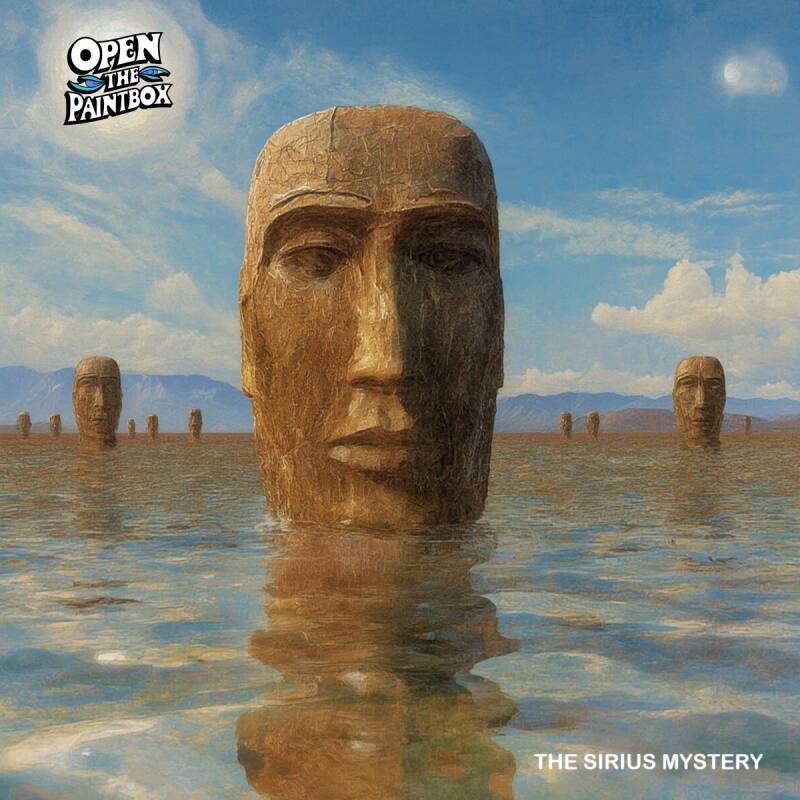
The Sirius Mystery (2015 - 2025 Remaster)
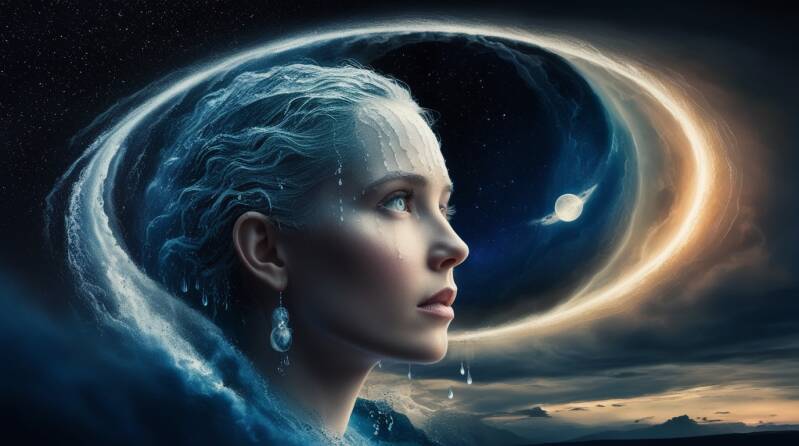
An entirely instrumental concept, based on the mysterious Dogon people and their ancient astronomical knowledge, which they represented through rituals, dances, and masks, depicting the ternary nature of the Sirius star system.
Since the 1930s, this has been the subject of numerous studies and is deeply connected to the mysteries of ancient civilizations, also referenced by many authors, among whom Graham Hancock and Zecharia Sitchin stand out.
The album was first completed in 2013 and later revisited until 2015. Today, 20 years after the birth of Open the Paintbox, we present a fully restored and 24-bit remastered edition.